Balancing Harm and Benefit: A decision-making framework for heritage applications
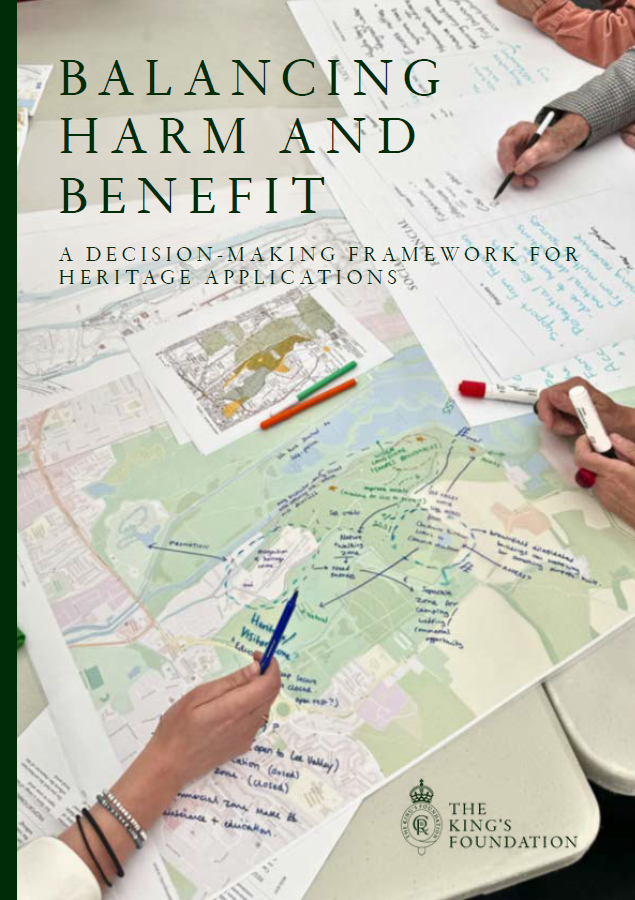
The stewardship of our historic buildings and places requires more than technical expertise; it requires processes that enable people to work together in pursuit of the common good. Too often, decisions affecting heritage assets are shaped through sequential consultation processes that encourage stakeholders to respond to fixed proposals from the perspective of their individual responsibilities. While this approach reflects established practice, it can inadvertently reinforce fragmentation, delay and unnecessary conflict. If we wish to secure better outcomes for heritage assets and the communities they serve, we must pay as much attention to the quality of the decision-making process as we do to the quality of the final proposal.
The framework presented in this report, based upon the Enquiry by Design process, suggests that a proactive, place-based and iterative approach provides a stronger foundation for balancing harm and benefit, where stakeholders can develop a shared understanding of significance, explore options collectively, test trade-offs transparently and build consensus around an appropriate direction of travel. Applying this framework can therefore support the long-term stewardship of heritage assets, reducing the loss of embodied carbon through the continued use and adaptation of existing buildings and delivering wider public value.